Most people who fail the theory test do not fail because they never read the Rules. They fail because a question was worded to catch them, or because two signs look almost the same. This page is about exactly those moments — how to read a tricky question, and how to tell the confusing things apart.
01
The five-step way to read any question
Do these five things in order, on every single question. It costs about ten seconds and it removes most careless mistakes.
Read to the very end
The trap almost always sits in the last few words — a negation, a place, or a condition. “What is the maximum speed…” and “What is the maximum speed outside a built-up area…” have completely different answers, and the difference is the last four words.
Find the trap word
Before you look at the options, name the word the question turns on: must or may, not or except, at least or no more than. Section 02 lists the ones that catch people most often.
Study the picture before the options
If there is a sign or a scene, work out what it means on its own terms first. Where is the sign standing? Which way do the arrows point? Is there a panel underneath it? A wrong option is written to sound right if you have not looked properly.
Answer in your head, then read the options
Decide your answer before reading the choices. Wrong options are written to be attractive; if you already hold an answer, they cannot pull you off course. If your answer is not on the list, you misread the question — go back to step one.
Eliminate, then choose
Cross out every option that breaks a rule you are certain about. Two questionable options are much easier than four. Only then pick.
Why this worksThe exam does not test whether you can recognise a correct sentence. It tests whether you can produce the right answer yourself. Reading the options first turns a knowledge question into a guessing game.
02
The trap words that decide the answer
A handful of words do almost all the damage. Learn to feel them jump off the page.
01
mustvsmay
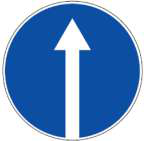
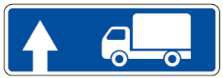
401Drive straight610Recommended straight route
An order and a suggestion can look almost identical. The blue circle (401) orders you to go straight — there is no other legal choice. The blue square (610) merely recommends that route; turning off is still perfectly legal.
If an option turns a permission into a duty — or a duty into a mere option — it is wrong.02
at leastvsno more than
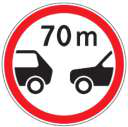
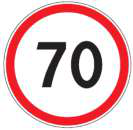
319Minimum distance329Speed limit
Both point at a number, in opposite directions. Sign 319 sets a floor — you must keep at least that gap. Sign 329 sets a ceiling — you must not exceed it. Numeric questions live on which end of the range is being fixed.
A warning triangle goes no closer than 25 m in town — placing it further away is always legal.03
in a built-up areavsoutside
550Built-up area551End of built-up area
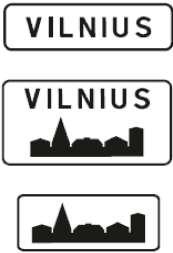
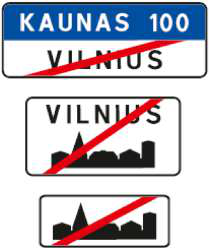
The single most common reason a right answer becomes wrong. These two signs are the switch: speed limits, triangle distances and the definition of limited visibility all change the moment you pass them.
50 km/h in town, 90 km/h outside. Limited visibility: under 50 m in town, under 100 m outside.04
stoppingvsparking
332No stopping333No parking
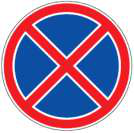
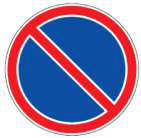
Two different legal terms. Stopping is a halt of up to 5 minutes (longer if you are letting passengers in or out, or loading). Parking is any halt longer than that. Banning stopping bans parking too — never the other way round.
332 forbids both. 333 still lets you halt briefly to drop someone off.05
give wayvsstop
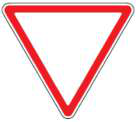
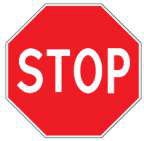
203Give way204Stop
“Give way” means do not force anyone to change speed or direction — if the road is clear you may roll straight through. “Stop” means the wheels must actually come to rest, every time.
At 204 a full stop at the line is compulsory even on an empty road at night.06
requiredvsrecommended
329Speed limit539Recommended speed
Some numbers in the Rules are advice, not law, and the sign shape tells you which: a red-bordered circle is enforceable, a blue square is guidance. Mixing the two produces a confident wrong answer.
The 2-second following distance is a recommendation; the 1–1.5 m gap past a cyclist is a requirement.
notexceptprohibited
A negation flips the whole question
You are no longer hunting for the correct statement — you are hunting for the odd one out: the option that is false, or the single case the rule does not cover. Say the question back to yourself in positive form before you look at the options.
“In which case is overtaking not prohibited?” — three of the four options describe places where it is banned.
alwaysneverall
An absolute is a prompt, not a verdict
The old exam folklore says “anything with always is wrong”. That is bad advice here — several Lithuanian rules really are absolute. Treat the word as an instruction to hunt for one counter-example. Find one and the option falls; genuinely fail to, and it is probably the answer.
Truly absolute: when reversing, you always give way to pedestrians. Not absolute: “you must always stop at a level crossing”.
03
The sign number decoder — the single best trick on this page
Lithuanian road signs are not numbered randomly. The first digit tells you the family, and the family tells you what kind of thing the sign does. Learn these eight ranges and you can half-answer any sign question before you have even pictured the sign.
101–152 · 52 signs
Danger warning
Warns only. Never orders anything, and never decides priority. Adjust your speed and look.
201–206 · 6 signs
Priority
Decides who goes first. Only six in the whole system — learn all six by heart.
301–341 · 41 signs
Restrictive
Forbids. Something you were allowed to do is banned from here on.
401–416 · 16 signs
Mandatory
Orders. You must do the thing shown — not merely may.
501–560 · 60 signs
Special regulation
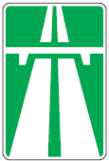
Starts or ends a regime. Motorway, one-way, built-up area, lane rules, the crossing itself.
601–636 · 31 signs
Information
Tells you where things are. Directions, distances, place names.
701–736 · 32 signs
Service
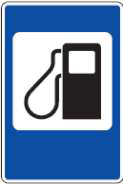
Points to a facility. Fuel, hospital, hotel. Never affects priority or speed.
801–857 · 57 panels
Additional panels
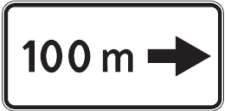
Modifies the sign above it. Distance, time, vehicle type, direction — never acts alone.
Two consequences worth memorising
A panel (8xx) never acts alone — it only narrows the sign above it, so “no parking” plus a panel showing a truck means only trucks are affected. And a warning sign (1xx) never gives you priority — if a question offers “because the warning sign says so” as a reason to go first, it is wrong.
04
Shape and colour: reading a sign you have never seen
Shape and colour carry the same message twice over, deliberately — so a sign still reads when it is covered in snow, backlit, or seen by a colour-blind driver. That redundancy is a gift in the exam: even an unfamiliar sign tells you its job.
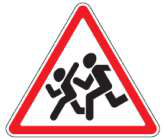
Triangle, red border
Warning
Something is ahead. Nothing is being ordered or forbidden.
Circle, red border
Prohibition
Something is banned from here on.
Circle, solid blue
Mandatory
You are being told to do this — it is the only permitted way.
Square, blue
Information or regime
Describes a situation. Rarely a duty in itself.
Octagon
Stop — sign 204
The only octagonal sign, so it reads by outline alone.
Downward triangle
Give way — sign 203
The only inverted-triangle sign in the system.
Yellow diamond
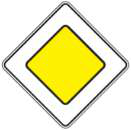
Priority road — 201
Crossed through with grey = 202, and your priority has ended.
Square vs circle
The shape carries the force
Blue circle = an order. Blue square = advice. Same colour, opposite weight.
The silhouette ruleStop (204) and Give way (203) are the only two signs with those outlines, because they are the two signs you must obey even when you cannot read them. If a question shows a snow-covered or rear-lit sign, its shape is the answer.
05
Look-alike signs, and how to tell them apart
These pairs cause more wrong answers than anything else in the sign section. For each one there is a single detail that settles it — learn the detail, not the picture.
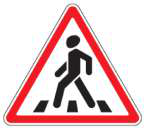
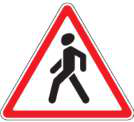
127Pedestrian crossing ahead
VS
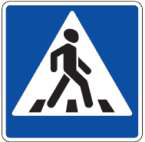
533Pedestrian crossing
Triangle = it is coming. Blue square = you are at it. The triangle (127) only warns you to slow down. The blue square (533/534) marks the crossing itself — that is where the duty to give way to pedestrians applies. Questions love to show the triangle and ask about giving way.
127Pedestrian crossing ahead
VS
128Pedestrians
One crossing, or people everywhere? 127 warns of a marked crossing at a specific point. 128 warns that along this whole stretch people may be walking on or across the carriageway, with no crossing at all — so there is no single place to watch.
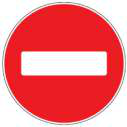
301No entry
VS
302Traffic prohibited
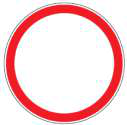
One direction, or both? 301 (the white bar on red) bans entry from your side only — traffic legally comes the other way, which is why it usually guards a one-way street. 302 (empty red circle) bans all vehicles in both directions. Getting this backwards is the classic one-way-street mistake.
332No stopping
VS
333No parking
Two bars beat one. 332 (crossed both ways) bans stopping and parking — you may not halt at all. 333 (single bar) bans only parking, so a brief halt to let a passenger out stays legal. Remember: banning stopping automatically bans parking; the reverse is not true.
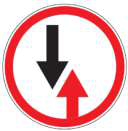
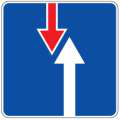
205Priority for oncoming traffic
VS
206Priority over oncoming traffic
Follow the red arrow — red is the one who loses. On 205 the red arrow points your way, so you give way. On 206 the red arrow points against you, so the oncoming driver waits. Both appear at narrow bridges and roadworks, where guessing is expensive.
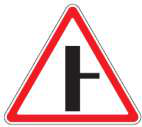
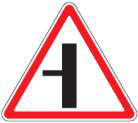
109Side road on the right
VS
110Side road on the left
The short stub is the side road; the long line is you. In both cases you are on the priority road — this is a warning, not a loss of priority. The question is only which side the other traffic will appear from. Same logic for 108, where the side road crosses straight over.
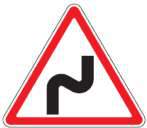
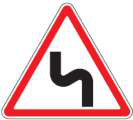
115Winding road
VS
116Winding road
Read the bottom of the sign first. Both are called “winding road”; the difference is only the direction of the first bend — right on 115, left on 116. Same trick separates 113 and 114 (a single bend right or left).
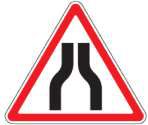
123Road narrows
VS
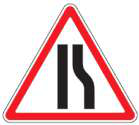
124Road narrows on the right
Count the squeezed sides. 123 narrows from both sides, 124 from the right only, 125 from the left only. None of the three tells you who has priority in the narrow section — that needs sign 205 or 206, or the general rules.
201Priority road
VS
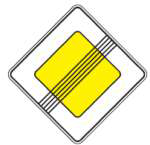
202End of priority road
Crossed out means it is over. The yellow diamond gives you priority through the intersections ahead; the crossed diamond means that protection has ended and the ordinary rules — including the right-hand rule — take over from here.
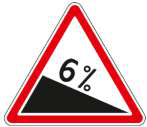
117Steep descent
VS
118Steep ascent
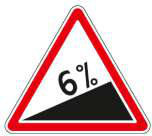
Read the slope left to right, like a sentence. Falling away to the right = descent (117); climbing to the right = ascent (118). It matters beyond naming: where these signs are posted and passing is difficult, the driver going downhill gives way (KET 137–139) — a favourite exam question that has nothing to do with naming the sign.
303No motor vehicles
VS
302Traffic prohibited
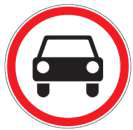
Look at what is pictured inside the circle. An empty circle (302) bans everything. A circle with a car in it (303) bans motor vehicles — bicycles and pedestrians are unaffected. Whenever a restrictive sign contains a pictogram, the ban is limited to what is drawn.
336End of restrictions
VS
504End of one-way road
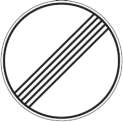
“End of” signs are their own family of traps. Grey diagonal stripes (336) cancel the restrictive signs that came before. But 502, 504 and the built-up area end sign cancel a regime, not a restriction — and the moment a built-up area ends, the speed limit changes with it.
Always check underneathBefore answering any sign question, look for an additional panel (801–857) below the sign. A panel can restrict the rule to certain vehicles, certain hours, a certain distance or a certain direction — and it changes the correct answer completely while the sign itself looks untouched.
The priority ladder — solve any intersection question
Every “who goes first?” question can be settled by walking down this list and stopping at the first rung that applies. Work strictly top to bottom and you will never talk yourself into the wrong answer.
A traffic officer’s signals
Beat everything else on this list — lights, signs and markings included. If an officer is directing traffic, nothing else matters.
Traffic lights
Where lights control the traffic, priority signs do not apply. The catch: if the lights are off or flashing amber, they are not directing anyone — drop straight to the signs, as if the lights were not there.KET 165–167
Priority signs (201–206)
Give way (203), Stop (204), Priority road (201) and its end (202). Only six signs, and they settle most exam intersections.KET 155
The type of road surface
With no officer, no lights and no signs, the surface itself marks the priority road: asphalt beats gravel or dirt. And if you cannot tell which surface you are on, the Rules settle it for you — behave as though you are on the side road.KET 159–160
The right-hand rule
Roads of equal rank: give way to whoever comes from your right. This is the bottom rung, not the first thing to reach for — most people apply it too early.KET 155
Trams break the tie
When priority is otherwise equal, a tram on rails goes first — regardless of which direction it comes from.
Three situations that skip the ladder entirely
You give way no matter what when: you are reversing; you are entering or leaving adjacent territory such as a yard, car park or petrol station (KET 27); or you are turning across a lane where pedestrians are already walking or waiting to step in. None of these is decided by signs.
07
Road markings: lines that answer the question for you
Marking questions look fiddly but follow three simple ideas: solid forbids, broken permits, and yellow always overrules white.
1.1
Solid line
Do not cross. The exception worth remembering: a solid line marking the carriageway edge or a parking space may be crossed.
1.5
Broken line
May be crossed from either side. Ordinary lane separation — the default state of the road.
1.6
Approach line
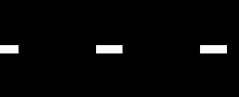
Dashes three times longer than the gaps. A solid line is coming — finish your overtake now. This is the detail exam questions hang on.
1.10
Solid + broken
Cross from the broken side only. From the solid side, only to finish an overtake already begun.
1.4
Yellow solid
Yellow governs halting: solid = no stopping and no parking. Where yellow and white disagree, follow the yellow.
1.9
Yellow broken
No parking — but a brief halt is still allowed. The 1.27 zigzag goes further and bans stopping along the whole line.
1.12
Give-way triangles
Give way here. The painted equivalent of sign 203 — and it turns up in questions where no sign is visible at all.
1.15
Hatched area
A channelising island. Driving over it is prohibited outright.
1.32
Yellow cross-hatching
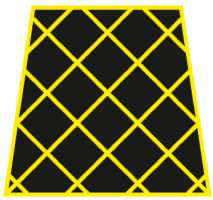
Do not enter unless you can clear it without stopping inside — even on a green light.
1.16
Lane arrows
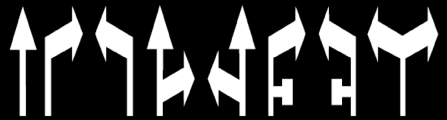
Binding, not advisory. A left arrow in the leftmost lane also permits a U-turn — a favourite exam detail.
The order of authority, againOfficer → lights → signs → markings. So when a question shows a sign and a marking that contradict each other, the sign wins. The one exception inside markings themselves: yellow beats white.
08
The numbers worth memorising cold
A small set of figures accounts for a large share of the numeric questions. These are worth knowing without thinking — no derivation, no reasoning.
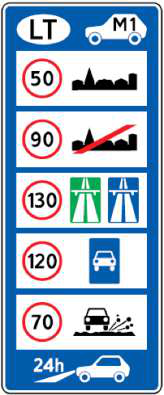
Nr. 619
General speed limits
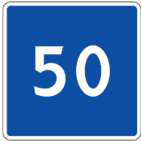
This sign stands at every border crossing into Lithuania and states the four default limits in one picture. If you can redraw it from memory, you have already answered a large share of the speed questions — the figures below are the same ones, plus the distances that go with them.
50 km/h
in built-up areas
20 km/h
in residential areas and car parks
90 km/h
on paved roads outside towns
130 / 110
motorways, summer / winter
2 sec
recommended following distance
1–1.5 m
gap when passing a cyclist
25 / 50 m
warning triangle, in town / outside
10 m
to the rail if a crossing has no Stop line
5 m
no parking before a crossing or junction
50 m
no parking near a level crossing
150 m
switch main beam to dipped
135 cm
below this height a child seat is required
Learn them in pairs, not as a listAlmost every figure has a twin that differs by location: 25 m in town / 50 m outside; 50 km/h in town / 90 km/h outside; limited visibility under 50 m in town / under 100 m outside. Store the pair together and the “in a built-up area” trap stops working on you.
Multi-answer questions: where good candidates lose points
Some questions have more than one correct answer. They are marked all-or-nothing: a partially correct answer scores exactly the same as a completely wrong one.
Watch for the hint. When a question accepts several answers, “Select all correct answers” appears under it. If you do not see that line, exactly one option is right — so stop at the best one.
Judge each option separately. Do not compare options against each other. Ask of each one, on its own: is this statement true? Four small true/false decisions are far more reliable than one big choice.
Never stop at the first correct one. The most common failure is finding one true option and moving on. Read to the end of the list every time — there is no rule that says only two can be right.
Beware the almost-true option. Multi-answer questions usually include one option that is right in spirit but wrong in a detail — a distance, a place, or a vehicle type. That detail is the whole point of the option.
10
Timing, guessing and the second pass
Knowing the material is half of it. The other half is not running out of time or nerve.
Do the easy ones first
Go through the whole test answering only what you know immediately. Momentum matters, and it guarantees every question you actually know gets banked before the clock becomes a problem.
Come back for the hard ones
Use the question grid to jump back to what you skipped. Questions often teach each other — a later question can remind you of the rule an earlier one needed.
Never leave a question blank
There is no penalty for a wrong answer, so an unanswered question is a guaranteed zero while a guess is not. Eliminate what you can, then commit.
Change an answer only for a reason
If you can name the rule that makes your first answer wrong, change it. If it is only a feeling, leave it — second-guessing without a reason turns more right answers into wrong ones than the other way round.
Aim well above the pass mark
The pass mark here is 80%. Practise until you are scoring in the nineties, so that exam nerves and one unlucky question still leave you comfortably above the line.
11
A seven-day plan that actually works
One hour a day for a week, in this order. It is built around the one habit that matters most: reviewing your own mistakes rather than re-reading what you already know.
Day 1
Signs, families 1–3
Warning, priority and restrictive signs. Learn the six priority signs by heart — they carry the most weight in the exam.
Day 2
Signs, families 4–8
Mandatory, special regulation, information, service and the additional panels. Then a signs-only test.
Day 3
Priority & intersections
Drill the ladder in section 06 until it is automatic. This is the topic that separates a pass from a fail.
Day 4
Speed, distance, lights
The numbers in section 08, learnt in pairs. Overtaking and following distance.
Day 5
Stopping, parking, markings
The stopping-versus-parking distinction, the yellow lines, and level crossings.
Day 6
Review your mistakes
No new material. Reopen every question you got wrong this week and say out loud why the right answer is right.
Day 7
Two full mock tests
Timed, no notes, no pausing. If both are above 90%, you are ready.
Every day
Ten minutes of signs
Short daily repetition beats one long session. Ten minutes before bed is enough to hold 300 signs.
The single highest-value habitAfter every test, open the mistake review and read the explanation for each wrong answer — then say the rule back in your own words. A question you got wrong and understood is worth more than ten you got right by luck.
12
The day of the exam
Nothing here is about traffic rules, and all of it costs people passes.
Sleep instead of cramming. Recall of a large sign set drops sharply when you are tired. The last evening is for ten minutes of review, not three hours of new material.
Arrive early. Rushing in raises your heart rate for the first ten questions, which is exactly where careless mistakes cluster.
Bring your documents. Identity document and the paperwork your driving school gave you. Check the requirements the evening before, not on the morning.
Read the first question twice. Deliberately slow down at the start. It sets the pace for everything that follows.
One hard question is not the exam. Mark it, move on, come back. Candidates lose far more points to panic after a hard question than to the question itself.
Check the official requirements yourselfExam booking, fees, documents and the number of questions are set by the authorities and can change. Confirm the current details with Regitra before your exam date — this page teaches the rules and the technique, not the paperwork.
Now put it to work
Reading tactics is easy; using them under a clock is the skill. Take a free test and watch for the trap words.
Prepared for learning, based on the Road Traffic Rules of the Republic of Lithuania (2024-02-01) and their annexes. Sign numbers and names follow Annex 1; markings follow Annex 3. The official full text is at e-tar.lt.